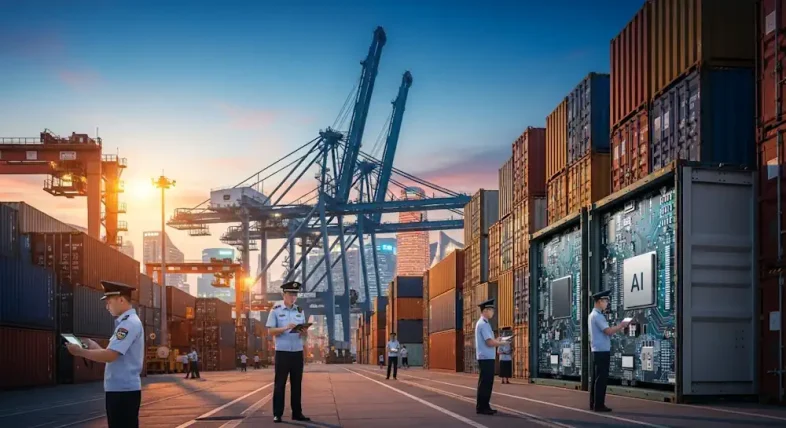
China is taking a closer look at semiconductor shipments coming into the country, with Nvidia’s AI chips getting special attention. Customs officers at major ports are conducting tighter inspections to verify what is being shipped and whether it fits the rules. The immediate impact is likely slower deliveries, more documentation, and added planning for companies that rely on high-end AI hardware. The longer-term goal is to lean more on local technology while keeping closer control over imports.
Why The Extra Checks Now
Officials have been working to reduce reliance on foreign technology, and AI hardware sits at the heart of that effort. Nvidia’s accelerators are widely used to train and run large AI models, but exports into China are shaped by licensing and restriction regimes outside the country. Closer inspections fit into a broader push to grow China’s own chip ecosystem while watching the flow of advanced parts at the border.
At the port level, this looks routine but adds friction. Importers may be asked for more detailed paperwork, clearer product codes, and proof that each shipment matches what is allowed. If something looks unclear, officers can hold it for review. Even a few extra days at the dock can disrupt timelines for teams planning major AI projects.
Where Nvidia Fits In
Nvidia has developed versions of its chips that are intended to comply with export limits, and in some cases, it has obtained licenses to sell specific products into China. Supplies remain tight, which makes planning difficult for customers who need predictable deliveries. With stricter checks at the border, buyers may build in longer lead times or mix in domestic accelerators for some tasks.
China is still an important market for Nvidia, though smaller than it once was. The company has adjusted products to meet evolving rules and has warned customers about limited availability. That combination of compliance work and supply constraints raises uncertainty for cloud providers, research labs, and startups that must secure computing capacity months ahead.
What This Means For Buyers And Builders
Large platforms can lower risk by preparing extra documentation and planning for possible delays. Some will split orders across multiple entry points, while others will consolidate through distributors with strong compliance teams. Smaller companies often choose the distributor route because it reduces the chance that shipments are held for additional checks.
Engineering teams are also rebalancing workloads. A common approach is to reserve imported GPUs for the most demanding training runs and use domestic chips for day to day inference. This is not perfect, but it helps stretch scarce resources and keeps product roadmaps moving.
The Policy Backdrop
These inspections are unfolding alongside broader trade and technology tensions. Washington continues to refine export rules and license terms for advanced chips, and Beijing is investing to scale local alternatives. None of these policies instructs a customs officer exactly how to inspect a crate, but together they create a climate with more forms, more checks, and less predictability.
For operations leaders, the practical response is scenario planning. That can mean keeping a modest buffer of inventory, signing longer contracts with domestic suppliers, or designing software so it can run on more than one type of accelerator. These steps add cost, yet they can prevent schedule slips if rules or supplies change quickly.
What To Watch Next
Clearance times at major ports are the first signal. If delays stay short, most firms will adjust with minor changes to scheduling. If holdups stretch into weeks, expect a faster shift toward local chips and more workload juggling. Licensing decisions for mid-range AI products aimed at the Chinese market are another lever, since new approvals or tighter terms can change availability quickly.
Price gaps between imported and domestic hardware are also telling. When the spread widens, it usually means supply is tight or rules have shifted again. Procurement teams will watch these indicators to decide how much to import, how much to source locally, and how to balance performance against availability.
Bottom Line
China’s tougher port checks are a practical step with clear ripple effects. They add time, cost, and uncertainty for importers of advanced AI hardware, especially Nvidia’s accelerators. They also support a longer strategy to use more homegrown technology. For now, most companies that depend on AI compute in China will run a two-track plan: import what they can, use domestic chips where they can, and keep adapting as rules and supplies evolve.